Ragdoll Playground
- 4.4
- Rating
- 50.00M
- Installs
- Free
- Price

 Analysis by App-foxy
I approached Ragdoll Playground as a casual sandbox rather than a traditional game with a clear finish line. That distinction matters. This is a simulation game from Reggae True Love where the appeal comes from experimenting with ragdoll characters and watching the playground respond to what I set up. It is free to download, aimed at Teen players, and has built a large audience, with more than 50 million installs and a 4.5 average from roughly 111 thousand ratings.
My first impression was that it is best understood as a digital toy box. I am not opening it to follow a long story, master a campaign, or compete on a leaderboard. I am opening it when I want a loose, visual sandbox in which I can arrange a situation, observe the result, and then change one part to see what happens. That makes it easy to pick up, but it also means the quality of the experience depends heavily on how much curiosity I bring to it.
What the playground is really asking you to do
The central loop is simple: create a scene, interact with it, watch the ragdolls react, and rebuild the scene when the result becomes predictable. I found that the fun is rarely in completing a single task. Instead, it comes from setting myself a small experiment. I might arrange objects differently, alter the starting position, or repeat a setup after changing one detail. The game rewards observation more than reflexes.
You May Also Like

 Blood Strike: 2.5 Anniversary
Blood Strike’s Loadouts Turn Every Drop Into a Tactical Gamble
A close look at Blood Strike’s custom loadouts: how fast access to signature weapons reshapes its battle royale rhythm, rewards preparation, and narrows the gap between fights.

 Pandora - Music & Podcasts
Pandora’s Music Is Easy to Start, but Harder to Recover
Pandora’s strength is its low-effort path from a seed to a station. Its weak spot is how much confidence it asks you to place in connection, setup, and quiet recovery.

 8 Ball Pool
 Is Built on Rivalries, Rematches, and Routine
A close look at the rivalries, rematches, shared routines, and unanswered safety questions that turn a quick pool match into a persistent mobile community.

 Samsung Music
’s Quiet Strength Is Playing What You Already Own
Its reach comes less from spectacle than from dependable access to a personal library. That simplicity is both the app’s strongest retention engine and its ceiling.

 AccuWeather: Weather Radar
AccuWeather Review: A Quick, Clear Forecast for Everyday Decisions
For everyday plans, the best forecast is the one you can understand quickly. AccuWeather makes rain timing, radar, and local conditions easy to act on, with a few trade-offs.

 Hill Climb Racing
Why Hill Climb Racing Still Turns Crashes Into One More Run
A tiny car, a bumpy hill and one more upgrade: Hill Climb Racing keeps resurfacing because its simple chaos makes every near-miss feel personal.
More From Our News Desk
View All News


That makes the title a comfortable fit for short sessions. I can spend a few minutes testing an idea without needing to remember a complicated control scheme. It also works when I have more time, provided I am willing to invent my own goals. Someone who enjoys physics toys, playful simulations, and open-ended experimentation will probably understand the attraction quickly.
The same openness can feel like a weakness if I want constant direction. There is no reason to assume that every session will deliver a new objective or a carefully paced challenge. If your favorite simulation games give you missions, upgrades, or a strong sense of progression, this one may feel unusually unstructured. I would not choose it as my main game if I needed a campaign to pull me forward.
One useful way to play is to treat each session as a controlled test. Start with a simple arrangement, change only one element, and compare the result with the previous attempt. That approach gives the sandbox more shape without turning it into homework. It also helps avoid the common problem of placing everything at once and then having no idea which part created the interesting outcome.
Why the ragdoll behavior carries the experience
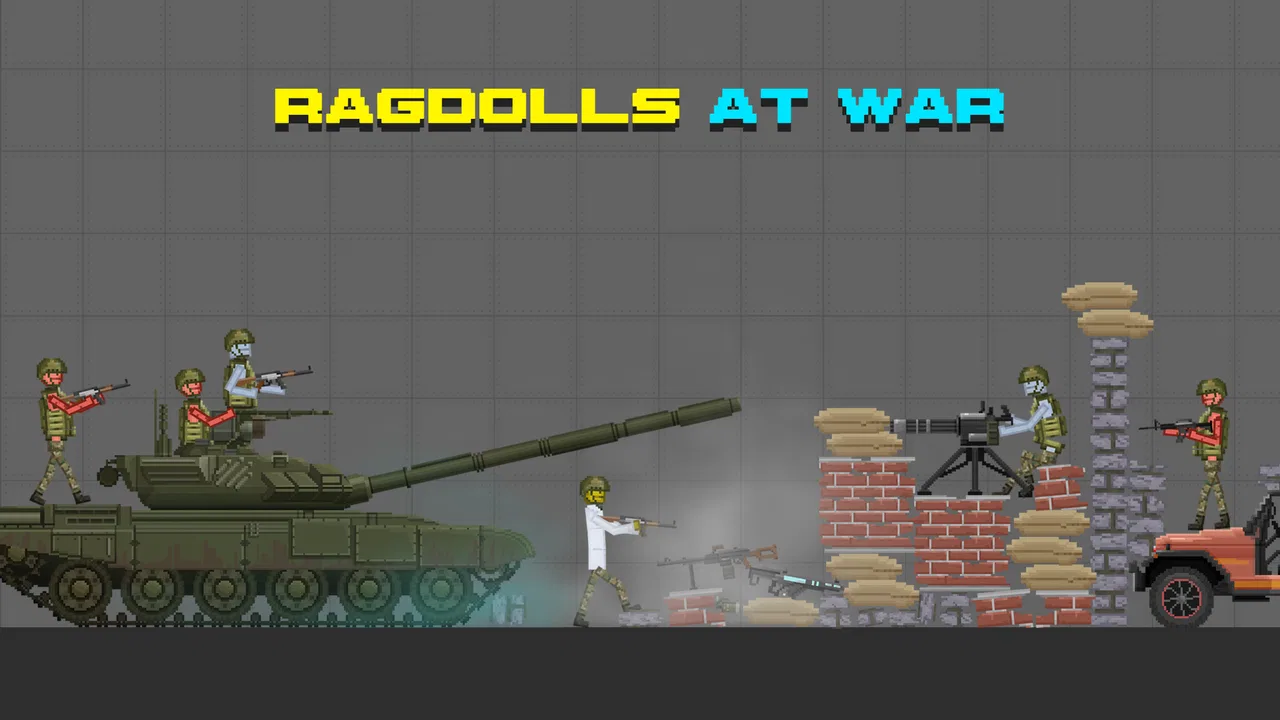
Ragdoll simulation is the main source of personality here. Characters do not behave like carefully animated heroes following a fixed routine. Their movement creates awkward, surprising, and sometimes amusing moments. I found that the most memorable scenes were often the ones that looked slightly accidental rather than perfectly planned.
That unpredictability is valuable, but it has a trade-off. A physics-based scene can be entertaining precisely because it does not behave exactly as expected, yet the same quality can make an attempt feel inconsistent. If you are trying to reproduce a particular result, you may need patience. I recommend changing one variable at a time instead of judging the whole game from a single chaotic experiment.
The Teen content rating is also worth taking seriously. The ragdoll presentation is playful, but the subject matter and visual reactions may not suit every younger player. Parents should look at the game themselves before deciding whether it fits their household. I would not treat a cartoon-like appearance as a substitute for checking the age guidance.
A practical session for an ordinary day
Imagine having ten minutes before leaving home. A conventional strategy game may punish you for stopping halfway through a mission, while a story-driven game may require more attention than you want to give. This playground is better suited to that moment. I can open it, build a small scene, see how the ragdolls respond, and close it without feeling that I abandoned a major objective.
Another useful scenario is playing alongside a friend and taking turns proposing experiments. One person chooses the arrangement, the other predicts the result, and then both watch what happens. The game does not need to be treated as a serious contest for this to work. The value is in comparing expectations with the simulation, which gives a casual session a little structure.
I also think it can work as a creative break for people who enjoy visual cause and effect. Instead of scrolling through short videos, I can spend the same spare time making something happen and adjusting it myself. That is a modest benefit, but it is more engaging than passive entertainment when I am in the mood to interact.
Spending, progress, and pressure
The game is free to play, with optional purchases listed from $0.99 to $28.99 per item. That is the important purchase context I would want before installing it. The download itself does not require an upfront price, but anyone uncomfortable with in-app buying should review the device’s purchase controls before handing the game to a child or sharing a family device.
I would not install this expecting a clearly documented premium progression model. The strongest reason to play is the sandbox itself, not the promise of reaching an endpoint. Because of that, spending should be judged by whether an optional purchase improves the kind of experimentation you already enjoy, rather than by whether it is necessary to finish a campaign.
There is a subtle pressure point in open-ended games: when the player creates the goals, it can be difficult to tell whether a new item would genuinely expand the experience or simply refresh the novelty for a short time. My advice is to play the free version long enough to decide whether the basic playground already holds your attention. If the core interactions feel repetitive before you spend anything, a purchase is unlikely to solve the underlying problem.
For younger players, I would make the spending conversation explicit. “Free” describes the entry price, not every possible transaction. Set a purchase password or approval requirement on the relevant device, and explain that an attractive item is still a real purchase. That is practical protection, not a criticism of Reggae True Love; it is simply sensible whenever a game combines free access with optional items.
The current version is 1.15.0, and the game runs on Android 6.0 or later. Those details make it accessible to people using older supported Android devices, although compatibility alone does not guarantee the same comfort on every screen or hardware configuration. I would check the device’s available space and performance in practice rather than assuming an older phone will feel identical to a newer one.
Does it feel competitive or pay-to-win?
This is where the game differs from competitive simulations and multiplayer-focused titles. I did not approach it as a contest in which another player’s spending determines whether I can win. Its appeal is personal experimentation, so the usual pay-to-win question has less relevance than it would in a ranked game.
That does not make every purchase automatically good value. Optional content can still affect how much variety I feel I have, and a player may personally prefer a larger set of creative possibilities. But I would separate “more things to try” from “an advantage over another person.” Those are different kinds of value, and this game belongs much more to the first category.
If your priority is fair competition, I would choose a game designed around transparent matches, equal starting conditions, and a visible competitive system instead. This playground is a better choice when fairness means controlling your own spending and enjoying a private experiment, not when fairness means proving skill against a community.
That distinction also changes how I evaluate progress. In a conventional simulation, progress may mean unlocking stages, improving a character, or completing objectives. Here, progress is more personal: I become better at predicting the behavior of a setup, designing a scene with a particular outcome in mind, or finding a repeatable experiment. That can be satisfying, but it is not the same as a formal progression ladder.
Three habits that make the sandbox more rewarding
My first tip is to keep a simple mental record of what changed between attempts. If I move several objects at once, the result may be funny but not informative. By changing one part of the scene, I learn more about how the playground behaves and can recreate the outcome later.
Second, I would begin with a small setup rather than filling the screen immediately. A crowded scene can hide the cause of an unexpected reaction. Starting small makes it easier to understand the interaction, and then I can add complexity once the basic result is familiar.
Third, use failure as part of the design instead of restarting instantly. A ragdoll scene that collapses in an unexpected way may reveal a more entertaining idea than the original plan. I found the game more enjoyable when I stopped treating an imperfect result as wasted time and started treating it as a prompt for the next experiment.
These habits are more important here than fast fingers. They turn a loose toy into a repeatable creative routine. They also help answer a practical question many players have after installation: what am I supposed to do? The honest answer is that I decide, but I can make that freedom easier to enjoy by giving each session a small rule or question.
Where it fits among other simulation games
Compared with management simulations, this game is lighter and more immediate. I am not balancing a budget, planning a production chain, or waiting for a long-term system to develop. Compared with life simulations, it is less about relationships, schedules, and character stories. Its focus is the physical scene and the behavior that follows from arranging it.
Compared with puzzle games, it offers less certainty. A puzzle usually tells me that there is a correct solution. Here, a result can be interesting even when it was not the result I intended. That makes it a poor replacement for a carefully designed logic game, but a good alternative when I want to experiment without being told that I failed.
Compared with a traditional action game, the pace is calmer and the satisfaction is less dependent on reaction speed. I would recommend it to someone who likes watching systems unfold more than controlling a hero through precise levels. On the other hand, players who need immediate goals, escalating difficulty, or a strong reward schedule may find a mission-based game more motivating.
The best comparison is probably a physics sandbox or digital construction toy. In that group, the question is not whether the game has enough story, but whether its interactions remain interesting after the first novelty fades. My experience suggests that its longevity depends on experimentation. Players who naturally invent scenarios will get more from it than players who wait for the game to provide every next step.
Questions I would ask before installing
Will it work on an older Android phone? The listed minimum is Android 6.0, so devices meeting that requirement are within the stated support range. Still, I would keep expectations realistic about comfort and responsiveness on older hardware, especially when a scene becomes busy. Meeting the minimum operating-system requirement is a starting point, not a promise that every device will feel equally smooth.
Is it suitable for children? The age guidance is Teen, so I would not assume it is intended for young children simply because the presentation is playful. I would preview it personally, consider the child’s sensitivity to the game’s content, and use device-level purchase controls if the game is installed on a shared device.
Do I need to spend money to enjoy it? I could begin without paying, and the game’s basic appeal is its sandbox experimentation. Optional items range from $0.99 to $28.99 each, so I would decide based on sustained interest rather than impulse. If I am already enjoying the free experience, I can make a more informed choice; if I am bored, spending is not a reliable fix.
Is there a clear ending? I would not choose this for a conventional finish line. Its structure is better for self-directed sessions, repeated tests, and playful scenes. If completing chapters or collecting formal rewards is essential to your enjoyment, another simulation or puzzle game will probably serve you better.
Is it a competitive game? I would treat it as a personal sandbox rather than a serious competitive platform. That is good news if I want to experiment without comparing my performance with others, but it is a limitation if rankings, matches, or skill-based progression are the main reasons I play games.
My trust verdict after weighing the trade-offs
The audience size is encouraging: the game has passed 50 million installs and received around 2.8 thousand written reviews, alongside its 4.5 average rating. Those figures do not guarantee that I will enjoy it, but they show that the ragdoll sandbox idea has reached a substantial number of players. I would still judge it by the kind of session I want, not by popularity alone.
My main reservation is not the free entry model itself. It is the possibility that a player installs the game expecting a structured simulation and instead finds an open-ended playground. That mismatch can lead to disappointment. The game is strongest when I am happy to create my own challenges, accept unpredictable results, and stop playing when the experiment has run its course.
I would recommend it to curious players who enjoy physics-driven scenes, casual experimentation, and games that can be opened for a short break. I would also recommend it to anyone who likes turning a simple system into a personal challenge. The three habits above—small setups, one change at a time, and patience with unexpected outcomes—make a noticeable difference to how much value I get from it.
I would skip it if I need a story, a tightly guided campaign, a clearly competitive environment, or a guaranteed sense of progression. I would also be cautious about installing it for a child without checking the Teen rating and securing in-app purchases. Those are not minor details when the game is free to enter but includes paid items.
Overall, Ragdoll Playground works for me as a flexible digital sandbox, not as a complete replacement for every other simulation game. Reggae True Love has built an experience whose best moments come from curiosity rather than instruction. If that sounds like your kind of play, the free starting point makes it easy to test the idea responsibly. If you need the game to tell you exactly what to do and why you should keep going, I would spend my time elsewhere.
FAQs for Ragdoll Playground
01What is Ragdoll Playground?
Ragdoll Playground is a sandbox simulation game that allows players to experiment with physics and ragdoll characters in a virtual environment. Players can create, manipulate, and interact with various objects and scenarios, encouraging creativity and exploration. The game is available for both Android and iOS devices.
02Is Ragdoll Playground free to play?
Yes, Ragdoll Playground is free to download and play. However, it may contain in-app purchases or ads that enhance the gameplay experience or unlock additional features. Players can enjoy the core functionalities without mandatory purchases, but optional content might require spending money.
03What are the main features of Ragdoll Playground?
Ragdoll Playground offers a wide range of features, including a variety of customizable characters, interactive environments, and physics-based mechanics. Players can create elaborate setups and watch how the ragdolls react to different situations. The game also supports modding, allowing users to introduce new elements and scenarios.
04What devices are compatible with Ragdoll Playground?
Ragdoll Playground is compatible with most modern Android and iOS devices. However, it is recommended to check the specific system requirements on the respective app stores to ensure optimal performance. Older devices may experience lag or incompatibility issues, affecting the overall gameplay experience.
05Is there a community or support for Ragdoll Playground?
Yes, Ragdoll Playground has an active community where players can share their creations and exchange tips. The developers often engage with the community for feedback and improvements. Support is typically available through the app's official website or social media channels, ensuring players can resolve any issues they encounter.
Pros
- Fun and creative sandbox experience.
- Wide variety of tools and items.
- Realistic ragdoll physics.
- Simple and intuitive controls.
- Regular updates with new content.
Cons
- Graphics are somewhat basic.
- Can be laggy on older devices.
- Ads can be intrusive.
- Limited tutorials for beginners.
- No multiplayer features available.

Ragdoll Playground
Gallery